
A Knowledge Graph Approach to Identifying Safe Career Pathways
| # | Section | Description |
|---|---|---|
| 01 | The Problem | Automation risk across 9,978 Egyptian jobs |
| 02 | Our Approach | Knowledge graph + community detection |
| 03 | Transition Examples | Real career pathways with skill overlaps |
| 04 | Broader Insights | System-level patterns from 1,063 transitions |
| 05 | Policy Recommendations | Actionable next steps for workforce development |
The Central Question
We need to identify which skills workers already have, which jobs are safe destinations, and what training bridges the gap.
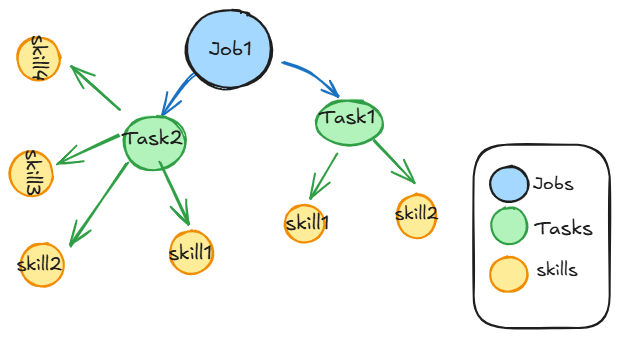
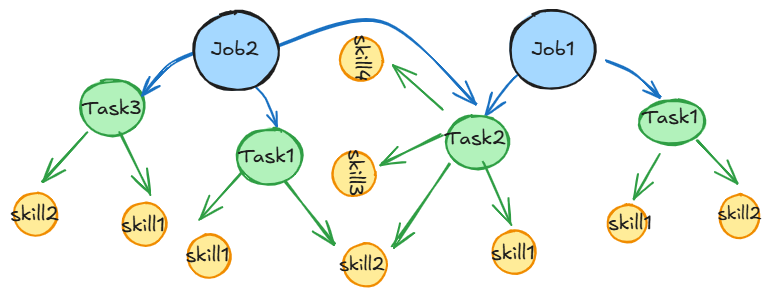
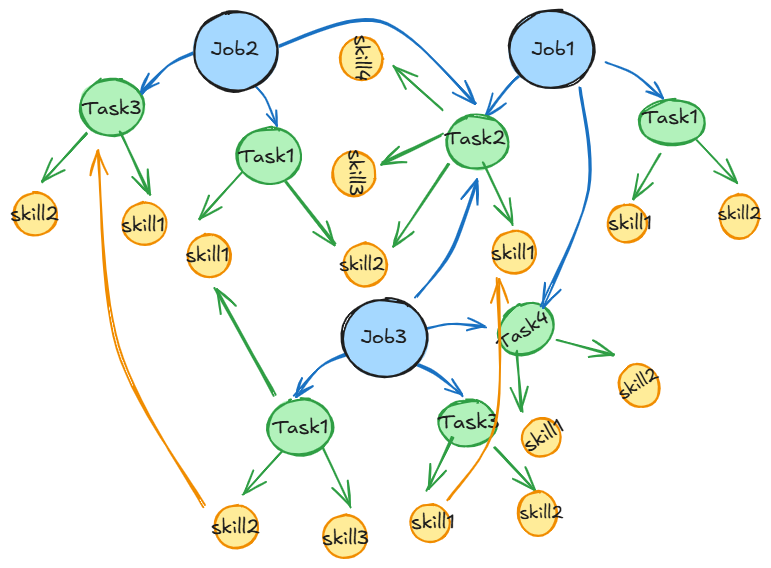
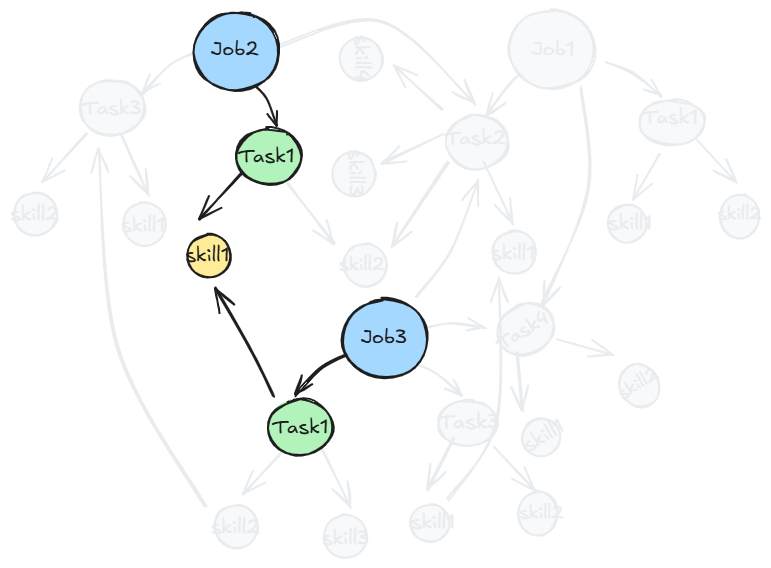
A knowledge graph of 9,978 jobs and 84,346 skills
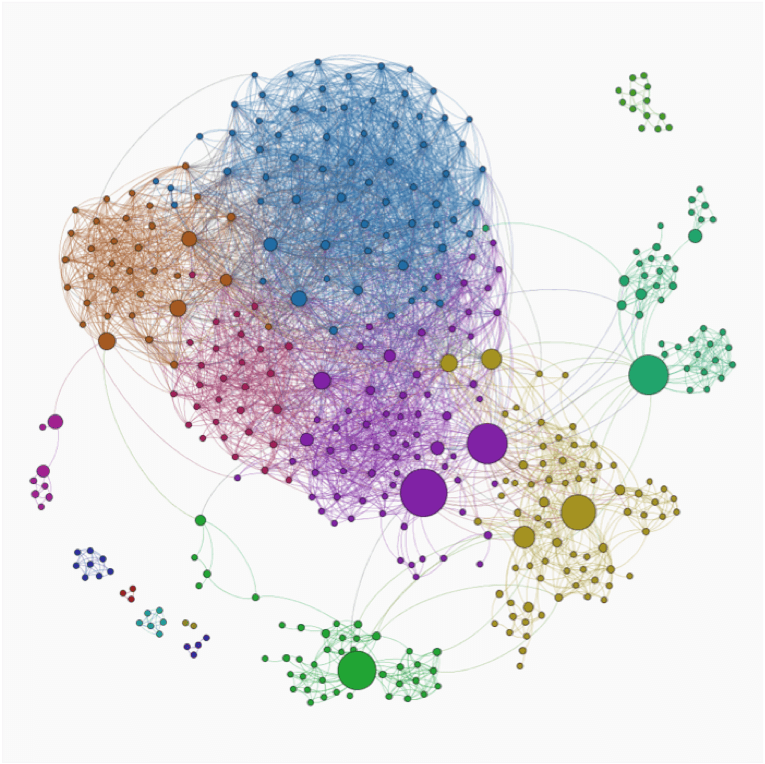
Community detection reveals natural job clusters based on shared skills
Groups of jobs that share many skills — like a "Sales & Business Development" community of 1,933 jobs where workers can easily move between roles
Skills that sit on the shortest paths between job communities — workers who have these skills can transition across different sectors
Classifies by job title. Rigid boundaries. A Sales Engineer is always under Professionals.
Clusters by actual shared skills. A Sales Engineer may cluster with Project Managers — not other engineers.
This reveals transition paths ISCO misses. Our graph detected 7 natural communities that cut across ISCO boundaries.
If the destination job requires 8 skills, you need at least 4 matching skills for a viable transition.
The transition examples above reveal individual stories. When we zoom out to all 1,063 pathways, three system-level patterns emerge.
How many workers are at risk — and how many have a way out?
Bridge skills, danger signals, and the gaps that block transitions
The golden training bundles that unlock the most pathways
How many workers are at risk — and how many have a way out?
Bridge skills, danger signals, and the gaps that block transitions
Skills that connect the most jobs across different occupation groups — workers with these skills can transition across sectors
The most frequently needed skills that high-risk workers lack when transitioning to safe jobs
Highest average automation risk
Lowest average automation risk
Highest average automation risk
Lowest average automation risk
The golden training bundles that unlock the most pathways
Evidence-based interventions derived from network analysis of 9,978 occupations and 84,346 skill relationships
Task restructuring costs 3-5x less than displacement.
Force multipliers unlocking lateral mobility across communities.
Match by capabilities, not credentials.
40% cheaper than reskilling. Unblocks 1,063 pathways.
AI-Driven Labor Market Transitions in Egypt
The Egyptian Center for Economic Studies (ECES)
arXiv: 2601.06129v2